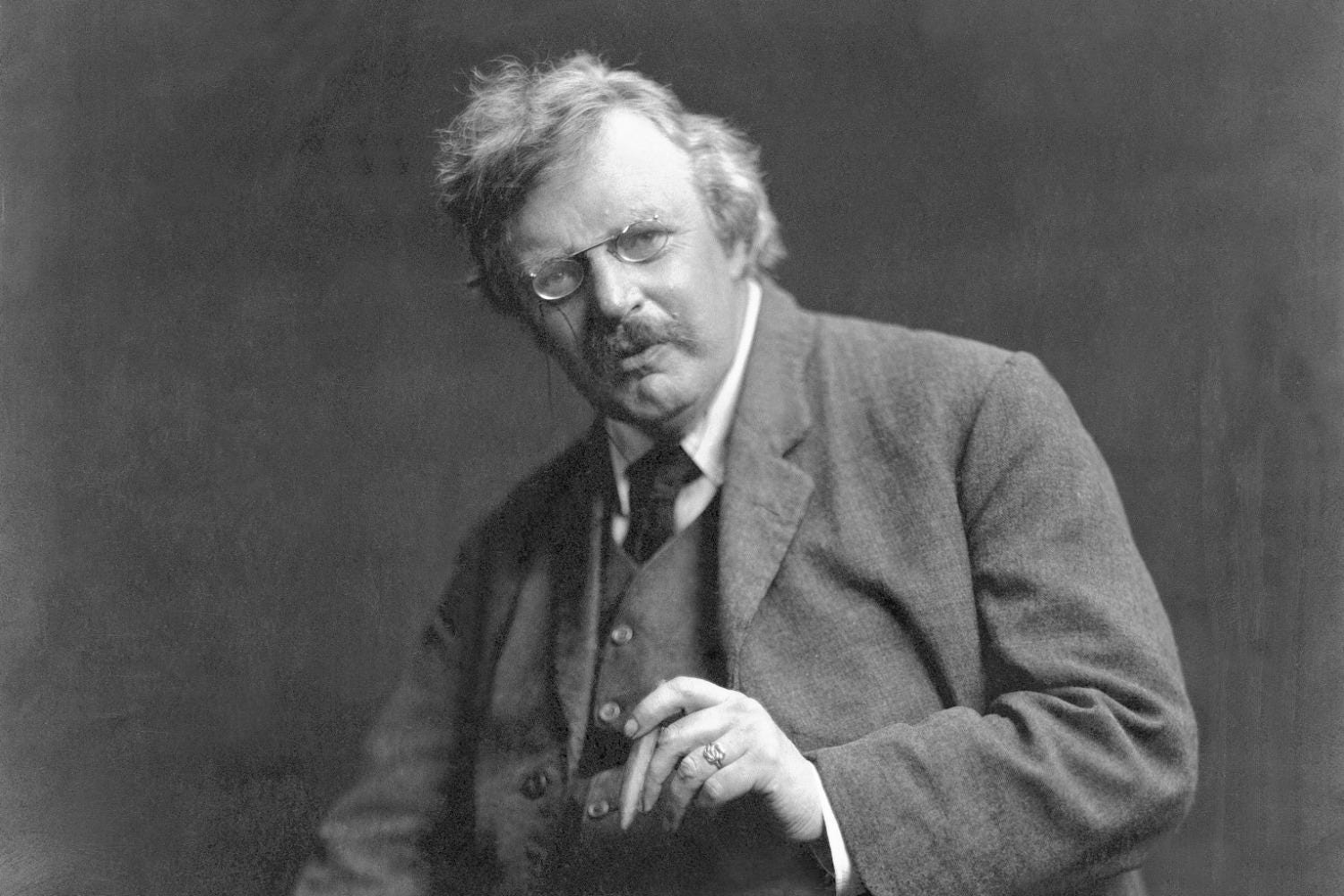
Imagination does not breed insanity. Exactly what does breed insanity is reason. Poets do not go mad; but chess players do. — G.K. Chesterton
It’s not so much that an insane person has no reason. Rather the problem is that the person only has reason. Clearly there are flaws with that idea, particularly when one looks into a mental illness like schizophrenia. Because there is more going on than the witty comment of Chesterton. But there is a ray of truth to what he is saying.
If all a person has is reason, they cannot operate in the world. Love doesn’t actually make sense if one only has reason. At best, a person has to come up with a whole theory of how human beings are evolved to help each other and how our survival as individuals is dependent on other people liking us—so much so that we act against our own self-interest, in order to ‘love’ others.
A martyr is a good example of real love. A martyr does not operate from the perspective of pure reason, or from a purely self-interested evolutionary approach. Instead, he or she allows their life to end in order to help others; putting his or her love for God before even themselves.
One could argue that people sacrifice themselves in martyrdom, because humans are uniquely aware of the future and death; and our intelligence allows us to conceptualize our reputation past death. That’s ultimately why people are willing to give up their lives for others. But that’s not really love. It’s only a veiled self-interest.
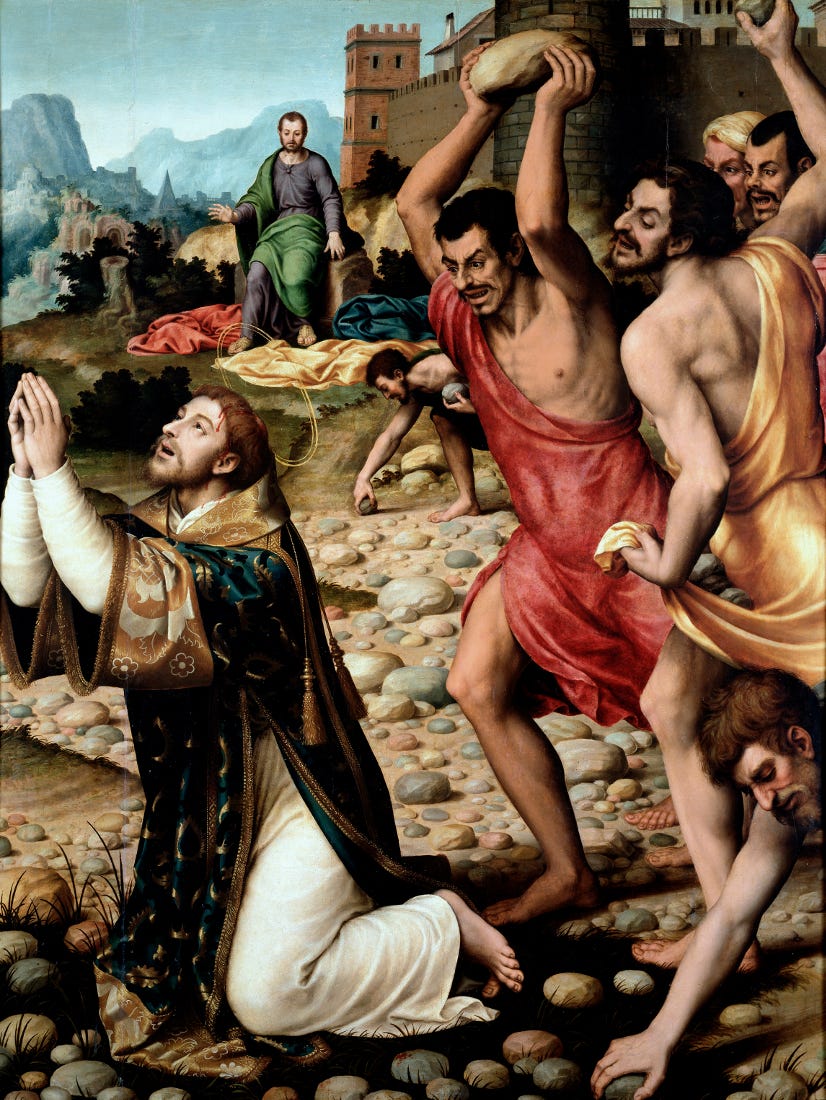
That kind of selfish reasoning does make some sense, within the strict confines of evolution. But it doesn’t make a lot of sense if one has experienced love. A person who chooses to die, so that others may fully live, is acting out of real love. That person is acting out of a supernatural force; to see another person flourish. The Catholic Bishop Robert Barron defines love, while drawing on the writings of the 13th century theologian Saint Thomas Aquinas, as choosing ‘to will the good of the other.’
Maybe that is the best definition of love. Praying for one’s enemies, something which is often never even recognized by the person being prayed for; or choosing to forgive those who have objectively done us wrong. These are the acts of real love which redeem the world from evil and suffering. Bishop Robert Barron says that accordingly: real love is a rare thing.
Christ offers Himself up as the perfect sacrifice for everyone who ever lived or will live; out of His infinite love for the Father. An Infinite Love which is the Holy Spirit. Christ perfectly does the will of the Father, meaning that Christ is fully self-sacrificing. He’s always willing the good of the other; and that includes the good of the Father. That perfect love which casts out all fear, is how we step into the Life of the Trinity.
The University of Toronto cognitive scientist John Vervaeke, when speaking of agape which is one of the Greek words used for love in the New Testament, says agape is the superpower which transformed the ancient world. Agape is a “more excellent way” as Saint Paul says.
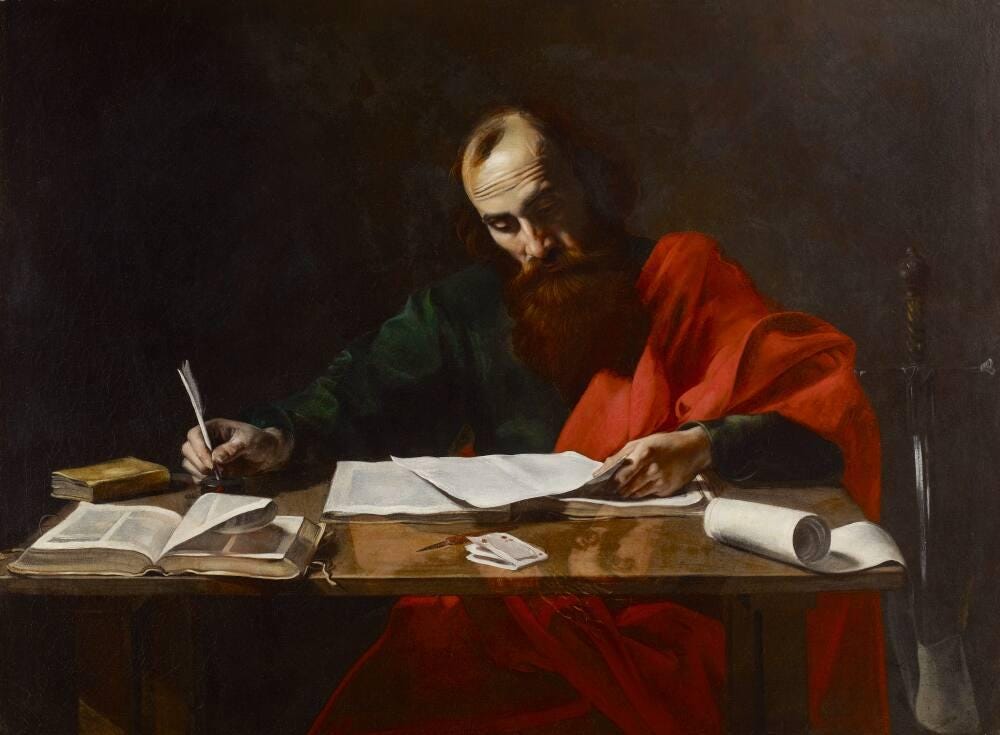
Vervaeke notes how agape is the superpower which turned all the non-persons of the Roman Empire into full persons. All the slaves, women, widows, children, orphans—these people could only become full persons through agape. So Christ did conquer the Roman Empire; it just took three centuries.
The culture war which the West is experiencing, is largely a Christian civil war; as Protestant Pastor Paul Vander Klay has alluded to. We are arguing about Christian values; with the left taking the agapic stance of caring for the marginalized, while the right gives agapic attention to a forgotten center (the center being the opposite of the marginal groups).
Agapic love is one example of acting in faith, rather than living purely on reason. Love is the most important example of having faith. Faith is the “evidence of things not seen,” as Saint Paul writes. There always has to be a gap between our reason and reality. It’s in that gap that faith operates. Faith and reason combine for knowledge. They are not contradictory.
Love is a faithful trusting in Reality. The existence of love, not as a feeling but as an act of the will—most typified in martyrs and Christ Himself—further unravels the entire Enlightenment project of pure reason. Love is not purely explainable through empirical science. As the Catholic philosopher Blaise Pascal writes:
The heart has its reasons which reason knows nothing of.
John writes in his Gospel that God is love. Because God is unity and multiplicity together. That is what the Trinity is: Love. Willing the Good of the Other.
Love is the superpower which makes life worth living. To trust in God, which is what faith is—existentially choosing to stand with Love—is the act of real love which makes possible all other acts of love; whether a person intellectually notices that or not. A person who is acting in love, has faith in Reality. That person has chosen to stand with, and bet their life on, Real Love.
Dan Sherven is the author of four books, including the number one bestseller Classified: Off the Beat ‘N Path and Uncreated Light. Sherven is also an award-winning journalist, writing for several publications. Find Sherven’s work.